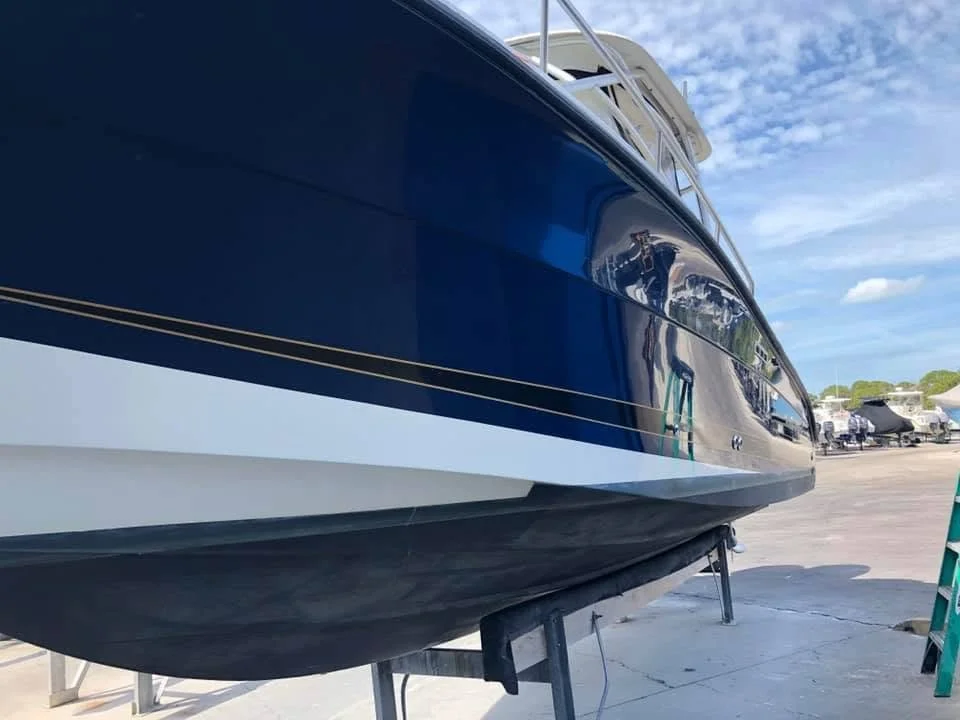
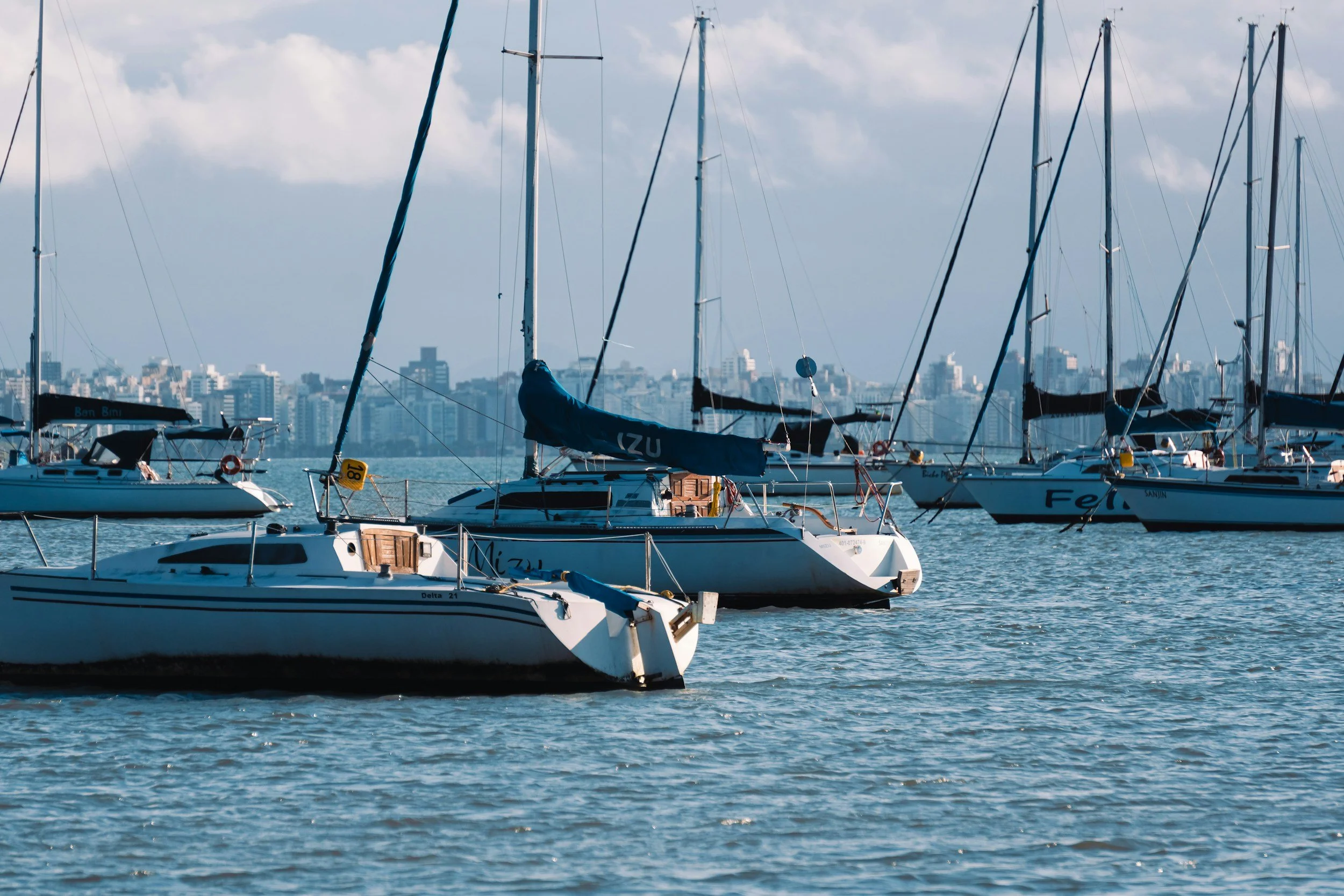
Boat Oxidation Removal And Compounding In Tampa Bay
Chalky, faded gelcoat brought back to real color and gloss, then sealed to stay that way. Done at your dock, lift, or driveway.
Chalky, faded gelcoat brought back to real color and gloss, then sealed to stay that way. Done at your dock, lift, or driveway.
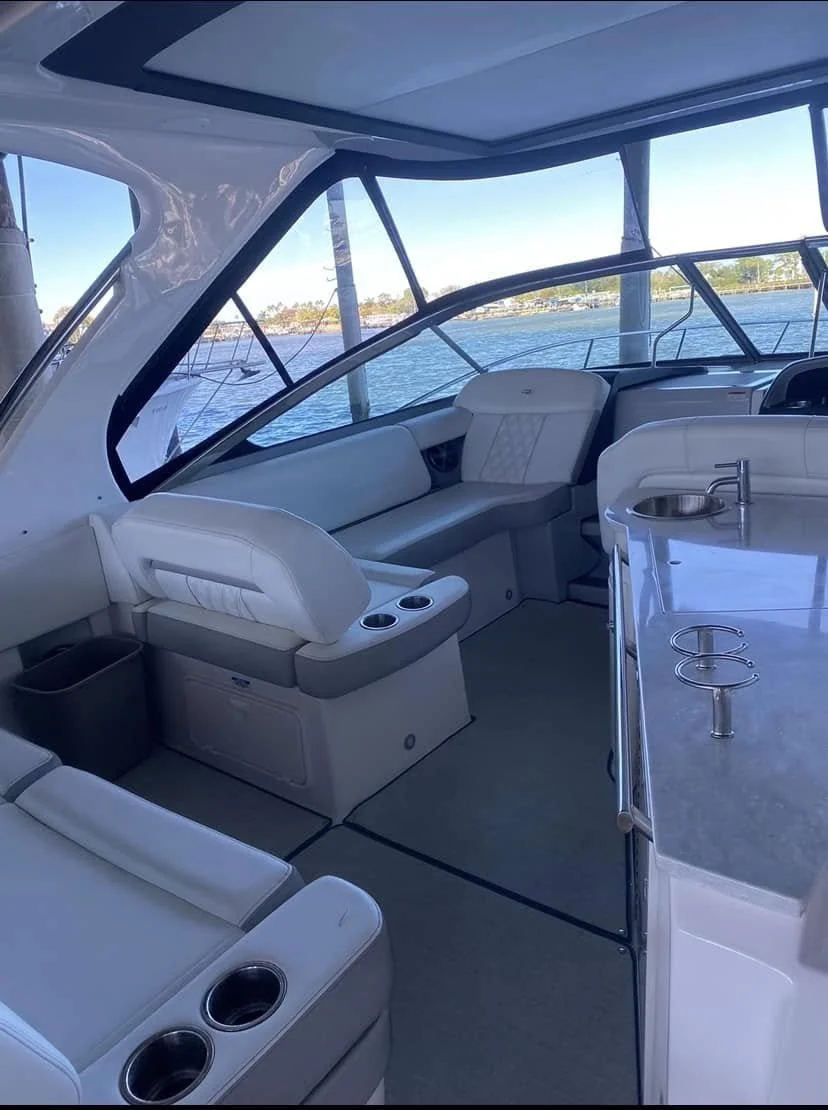
Run your hand along the hull. If it comes away with a white, chalky film, the gelcoat is oxidizing. You might also notice the color turning flat and pale, especially on the side that faces the sun, or water no longer beading the way it used to.
Most owners reach for a bottle of wax. It helps for a week, then the haze comes back, because wax sits on top of damaged gelcoat instead of removing it. Meanwhile, the oxidation keeps working deeper. The longer it goes, the more material you have to remove to fix it, and gelcoat is only so thick. Left too long, the surface becomes porous, stains soak in, and the only fix left is costly refinishing.
Caught early, oxidation is a restoration job. Caught late, it can become a paint job.
This service restores and protects the stainless hardware on your boat. We remove tea staining and surface corrosion with a marine stainless cleaner, polish the metal to bring back its bright finish, then apply a protective coating that slows salt from attacking it again.
It covers everything from bow and stern rails to cleats, grab handles, rod holders, ladders and hinges. It can be booked on its own, added to a wash or wax, or included in a full detail or maintenance plan.
We also clean the rust streaks left on the gelcoat below the hardware, so the boat looks right around the metal too.
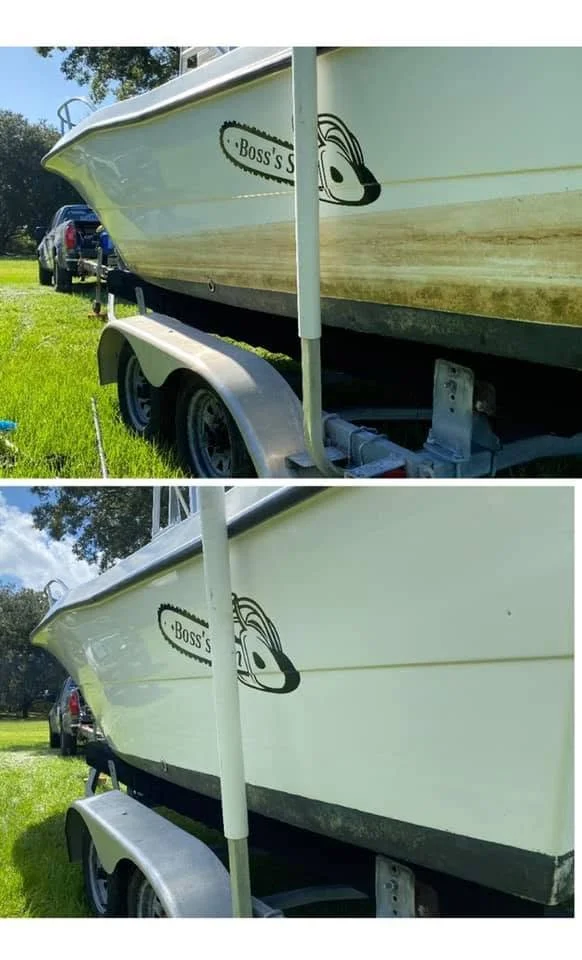
Oxidation happens in stages, and the stage decides what the boat needs.
Slight dullness, no chalk on your hand
Light chalk, color starting to fade
Heavy chalk, flat or blotchy color
Rough, porous surface, stains that won’t lift
Fiberglass or gray base showing through
Polishing and wax
Single-stage compound, polish and seal
Multi-step compounding, polish and seal
Assessment first; may be past compounding
Refinishing, not compounding
We’ll tell you which stage your boat is in before quoting. If the gelcoat is too far gone for compounding to help, we’ll say so rather than sell you a service that won’t work.
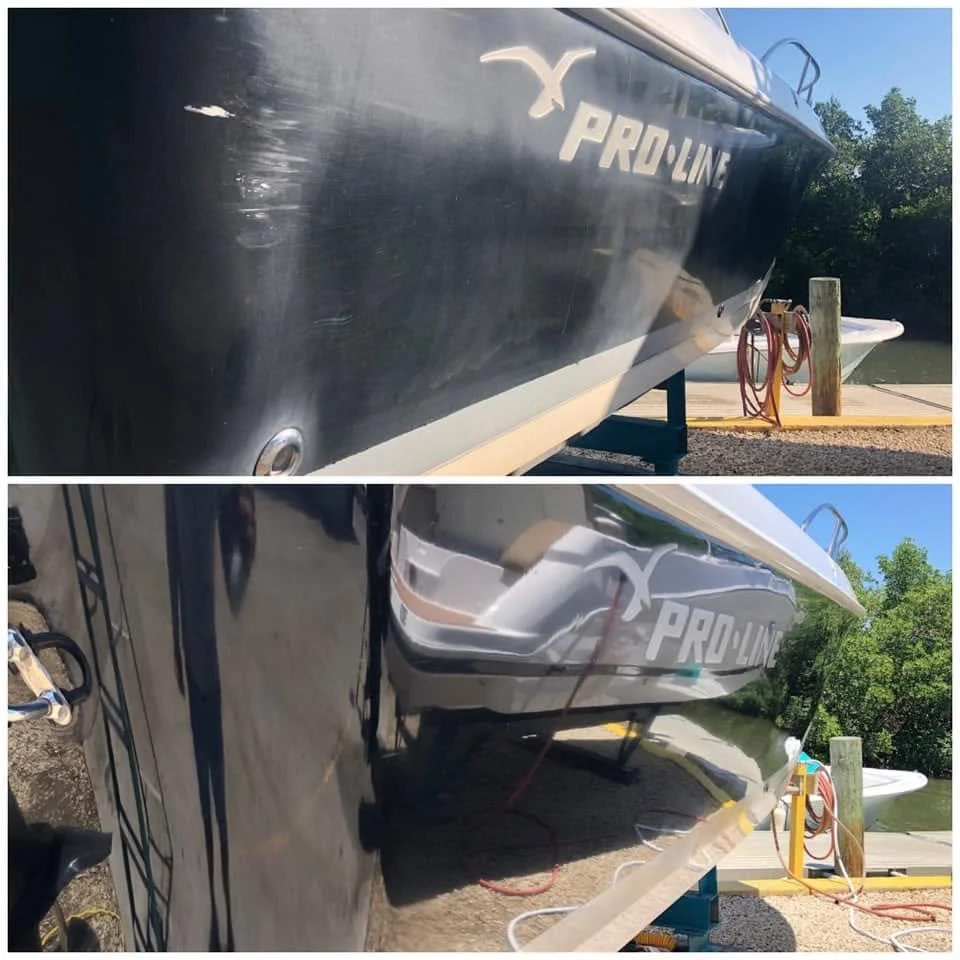
Removing the dead layer reveals the gelcoat’s original color. Blues look blue again and whites stop looking yellow-gray.
Stopping oxidation at the compounding stage preserves gelcoat thickness and pushes a repaint or regelcoat years further out.
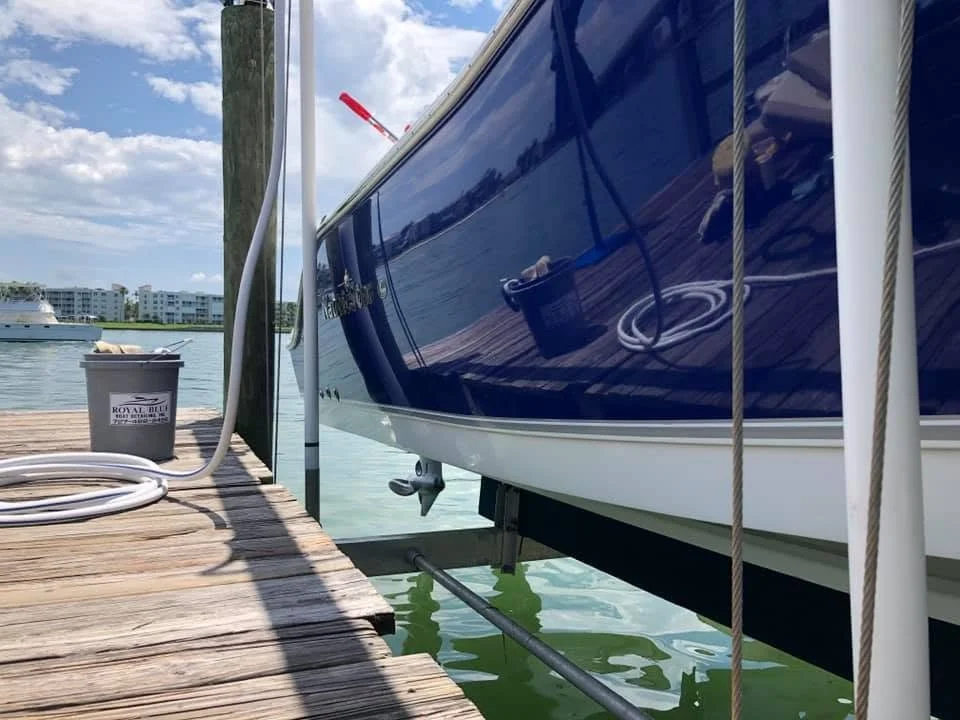
Oxidized gelcoat is porous and holds dirt, exhaust soot, and waterline stains. Once corrected and sealed, the hull rinses clean.
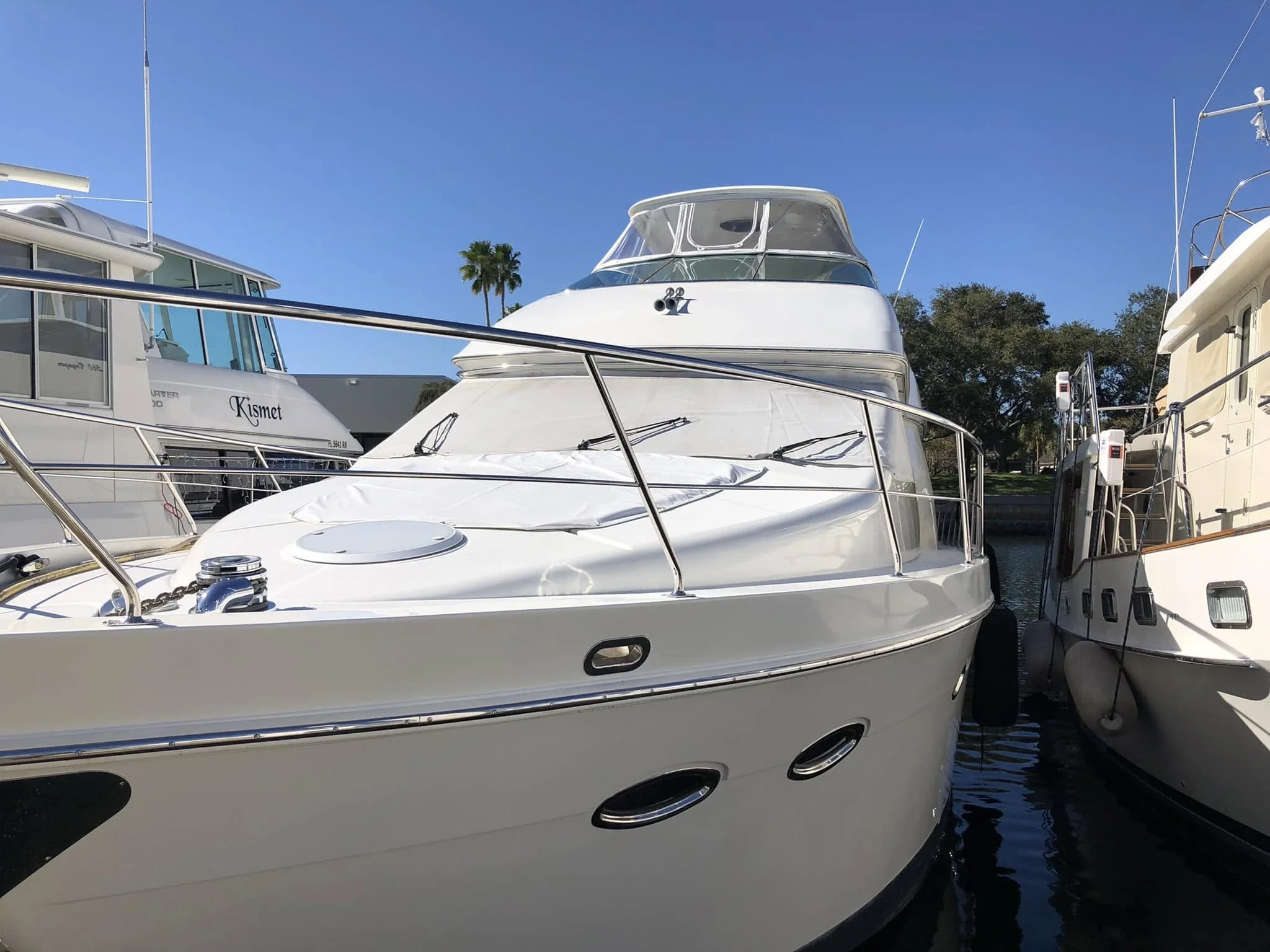
Faded gelcoat is the first thing buyers and surveyors notice. A restored hull makes an older boat look years younger.
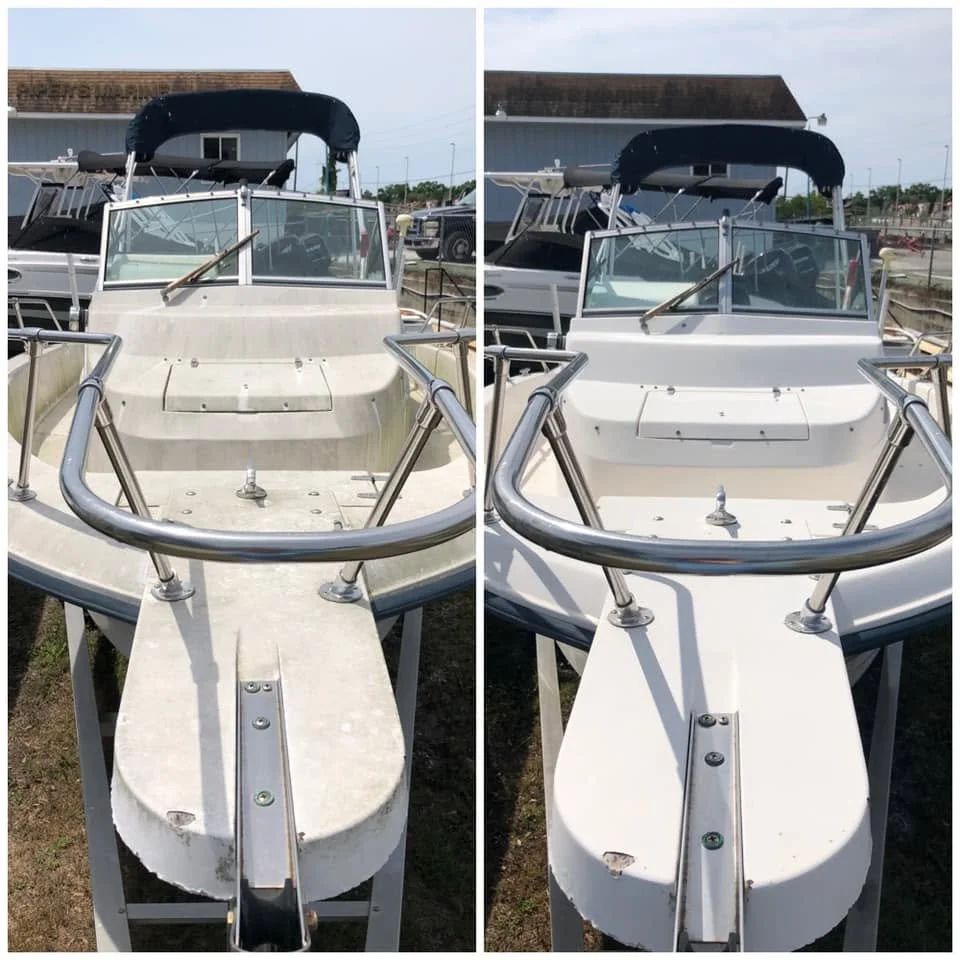
Wax and sealants bond properly to healthy gelcoat. Protection applied after compounding lasts longer than wax.

Oxidation level checked across the hull, topsides, console, and deck
Gelcoat condition noted, including any thin spots, cracks, or old repairs
Honest recommendation on whether compounding will get the result you want

Marine wax or sealant protects the finish from UV and moisture
Protective coating helps maintain gloss and resist oxidation
Protection is chosen based on each surface’s condition

Full wash and decontamination so grit isn’t ground into the finish
Decals, rubber rub rails, electronics, and hardware masked or protected
Test area to choose the gentlest compound and pad that removes the oxidation

Compound residue removed from seams, hardware, and non-skid
Work area left clean
Before-and-after review with you, plus advice on keeping the finish protected

Machine compounding with a marine cutting compound to remove oxidized gelcoat
Additional passes on heavily affected areas, sun-facing sides, and upper hull
Machine polishing to remove compounding haze and restore gloss
Areas not included unless quoted: bottom paint, below-waterline gelcoat, painted surfaces and canvas.
Boat length and hull height
Oxidation stage
Gelcoat color
Areas included
Access
More gelcoat surface means more machine time.
Heavy oxidation needs more passes and more aggressive steps.
Dark and colored hulls oxidize faster and need careful polishing.
Hull only, or hull plus topsides, console and deck.
Lift, slip, trailer or dry stack affects reach and setup.
Send photos of the hull in daylight, plus the make, length, and where the boat is kept.

We plan around weather and sun, since compounding goes best out of direct midday heat.

We check the oxidation stage, gelcoat thickness, and color if photos aren’t enough.
Wash, compound, polish, and seal, then inspect in natural light for missed spots and haze.

You get a fixed price, a time estimate and a straight answer on what result to expect.
We show you the before-and-after and recommend a waxing or maintenance schedule to protect it.
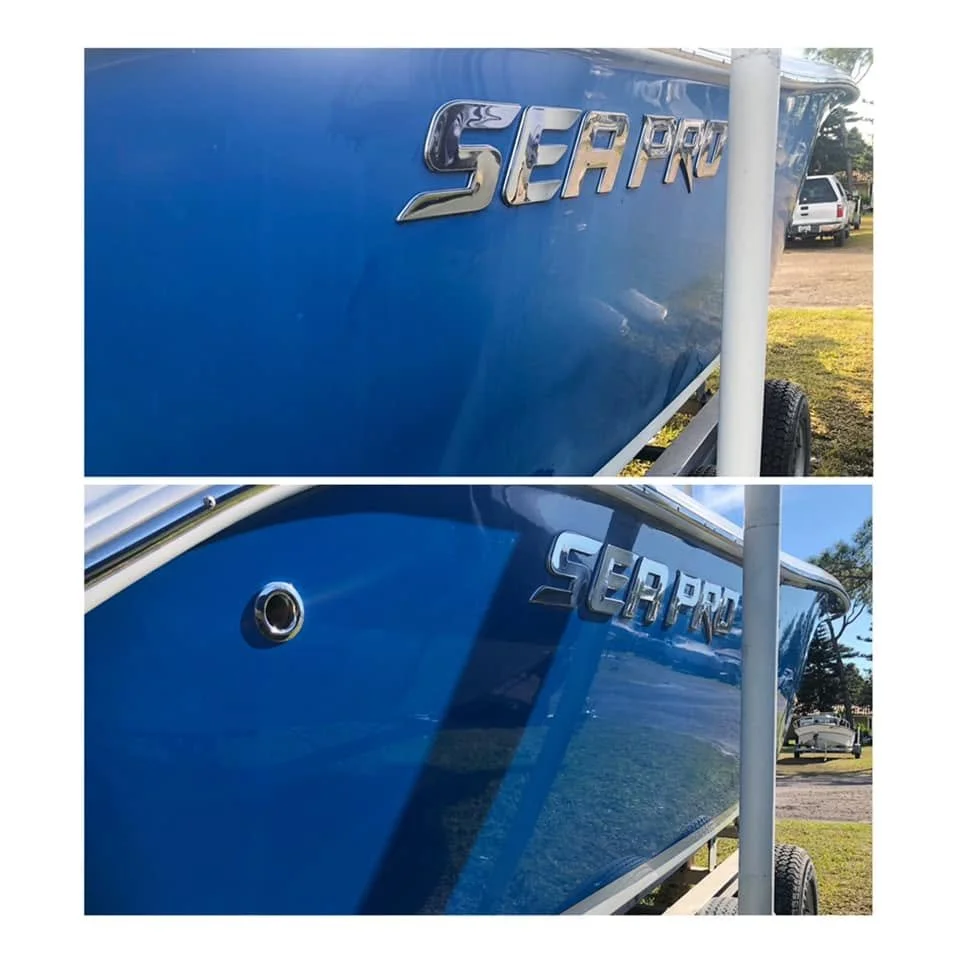
Least-aggressive approach. We start with the gentlest step that works to preserve as much gelcoat as possible.
Honest assessment. If compounding won’t fix it, we will tell you before you pay for it.
The right products. Marine compounds and pads made for gelcoat, not automotive paint.
Correction plus protection. Every boat is compounded, polished, and sealed. Correction without protection doesn’t last.
Mobile. Done at your dock, lift, slip or driveway, with no haul-out needed.
Licensed and insured in Florida. Operating as Royal Blue Boat Detail Inc.
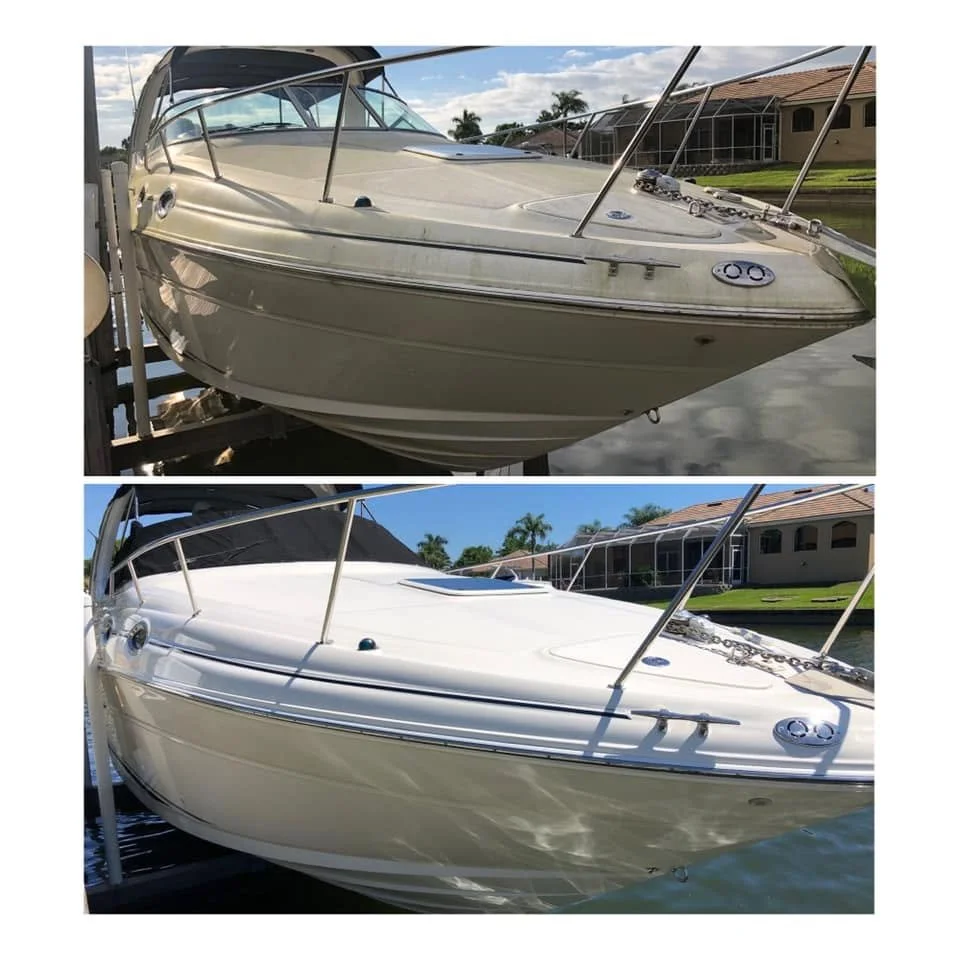
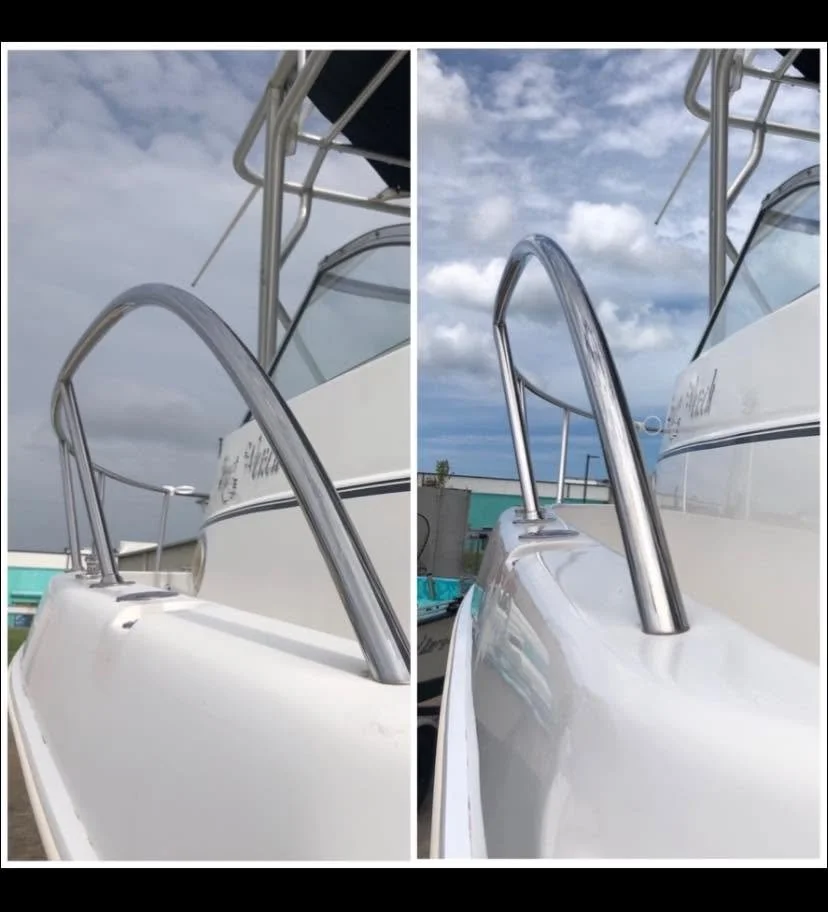
“Our boat was in desperate need of some work; Royal Blue brought it back to life.”
— Melissa and Jason, St. Petersburg, FL
“The owner of Royal Blue has been doing my monthly maintenance on my boat for years. It always looks fantastic and he is always pleasurable and professional.”
— Carl, Clearwater, FL
Cities: 📍Tampa, 📍St. Petersburg, 📍Clearwater, 📍Largo, Dunedin, 📍Palm Harbor, 📍Tarpon Springs, 📍Safety Harbor, 📍Oldsmar, 📍Gulfport, and 📍Apollo Beach
Neighborhoods: Davis Islands, Bayshore, Westshore, Snell Isle, Island Estates, Clearwater Beach and the Pinellas beaches
Counties: Hillsborough and Pinellas
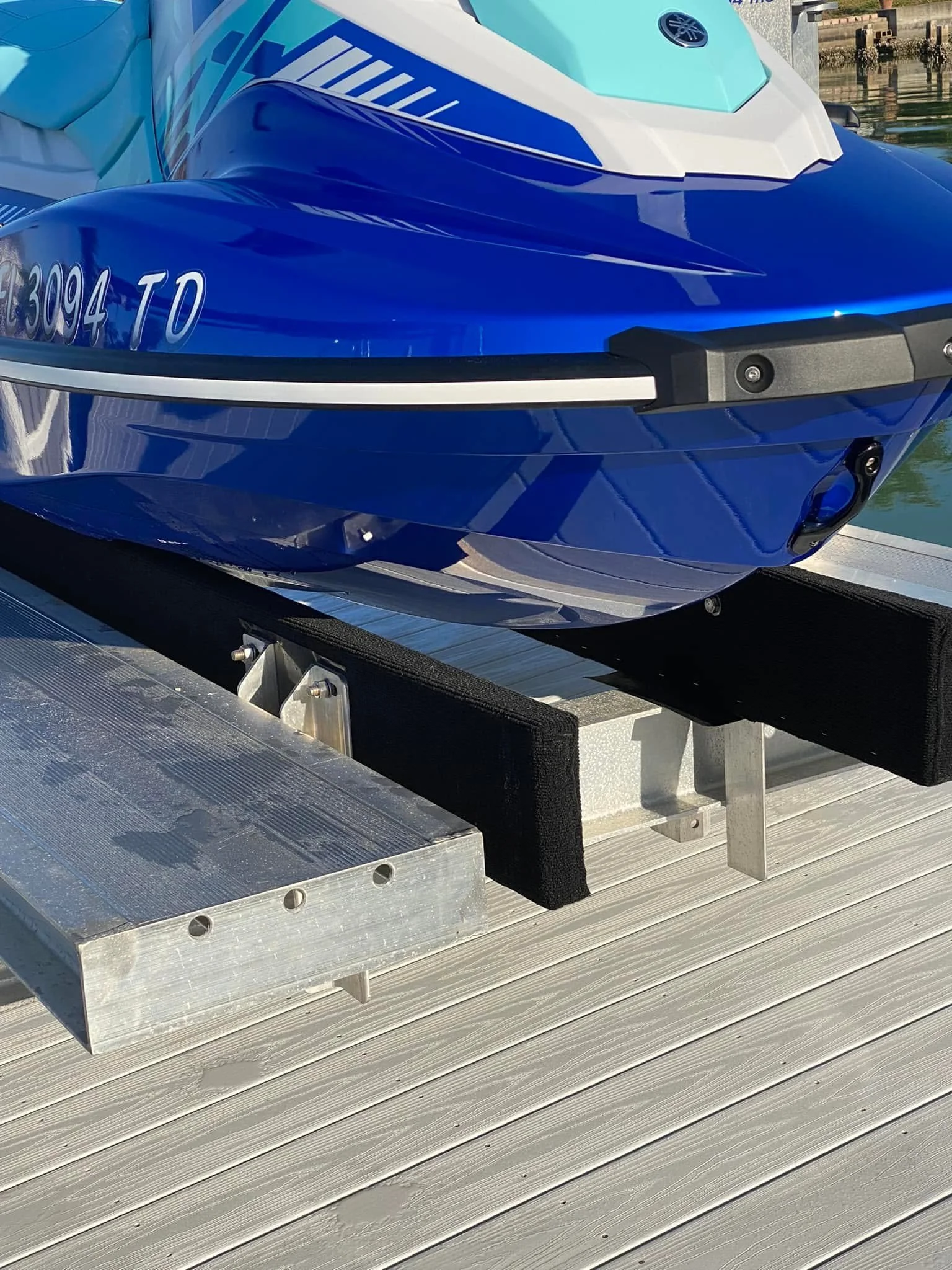
Tampa Bay sits under strong UV all year, so gelcoat never gets a break the way it does up north. Boats on lifts and in open slips catch direct sun every day, and the side facing south or west usually oxidizes first. Salt residue left to dry on the hull adds to the breakdown, and dark or colored gelcoat absorbs more heat and fades fastest.
After compounding, how you store the boat determines how long the results last. We’ll recommend a waxing schedule based on where you store your boat and how much sun it gets, so you won’t need to compound again in a year.
Most oxidized hulls look far better than their owners expect once the dead layer is gone. Send a few daylight photos and we’ll tell you honestly what compounding can do for your boat, what it will cost, and whether it’s worth it.